


Why the conversation around anti‑ageing is evolving
The term "anti‑ageing" has historically focused on reversing or correcting visible signs like lines, uneven tone, and loss of firmness. But skin ageing itself isn't inherently bad. Much of what drives visible changes isn't time passing — it's environmental stressors: UV exposure, pollution, oxidative stress, and the accumulation of DNA‑related damage over time. These are things we actually have meaningful influence over.
Here's the truth: you can't stop time. But you can absolutely minimise the visible effects of daily skin stress.
Think of it this way: two people can be the exact same chronological age and have completely different‑looking skin. That difference isn't genetics alone. It's how well their skin has been able to defend itself, repair damage, and maintain its essential functions over time. One person's skin has been supported. The other's has been left to manage on its own.
That gap — between skin that's been supported and skin that hasn't — is where skin longevity lives.
What is skin longevity?
Skin longevity isn't about erasing years. It's about extending your skin's health‑span — the period of time your skin can function at its best. Just as the broader wellness movement has shifted its focus from appearance to vitality and performance, skin longevity prioritises what's happening beneath the surface over what can be temporarily masked at it.
This approach centres on three core principles:
Preserving skin function
Healthy‑looking skin relies on cellular energy, communication, and repair. As NAD+ levels decline with age, these fundamental processes slow down — meaning skin becomes less efficient at renewing itself, repairing damage, and maintaining its structure. Supporting NAD+ helps keep skin functioning the way it's designed to.
Reversing daily DNA‑related damage
UV rays and pollution trigger DNA‑related damage beneath the surface long before it becomes visible. Addressing this damage early — rather than waiting until it shows up as lines, rough texture, or uneven tone — is what separates reactive skincare from truly proactive skin longevity.
Preventing visible signs of stress and breakdown
When skin's repair systems are well‑supported and damage is actively minimised, skin is better equipped to defend against future stressors. The result is firmer‑looking, more even‑toned, resilient skin — not because it looks "younger," but because it's genuinely healthier and functioning better.
Anti‑ageing vs. skin longevity: what's the actual difference?
This distinction matters — both for how you think about your skin and for which products you reach for.
Anti‑ageing typically asks: what signs of ageing are visible, and how do we correct or conceal them? It's reactive and surface‑focused. The results are often real, but they're addressing effects rather than causes.
Skin longevity asks: what does my skin need to function optimally, and how do I support those systems proactively? It's preventive and cellular‑level focused. The results build over time because you're working with skin's biology, not around it.
Neither approach is wrong. But if you want skin that stays resilient, even‑toned, and firm for years — not just weeks — the longevity mindset is where the most meaningful, lasting results come from.
The other key difference: skin longevity reframes ageing as natural rather than something to fight. Environmental damage, on the other hand, is something we can meaningfully influence. Shifting focus to what we can control is both more effective and more sustainable.
The role of NAD+ and DNA damage in skin longevity
Understanding skin longevity at a deeper level means understanding two things that most skincare routines don't directly address: NAD+ decline and DNA‑related damage.
NAD+ (nicotinamide adenine dinucleotide) is a coenzyme found in every skin cell, essential for energy production and cellular repair. As we age, NAD+ levels decline — meaning skin has progressively less energy to power the repair and renewal processes that keep it healthy. Slower cell turnover, reduced resilience, and visible changes in texture and firmness are all downstream effects of this decline.
DNA‑related damage accumulates daily from UV exposure, pollution, and oxidative stress. When NAD+ levels are healthy, skin's repair enzymes can address this damage efficiently. When NAD+ is depleted, damage accumulates faster than skin can correct it — and eventually, that accumulated damage becomes visible.
Supporting NAD+ while actively defending against DNA‑related damage is the scientific foundation of skin longevity. It's not about one ingredient or one product; it's about addressing the underlying cycle that drives how skin ages over time.
For a deeper look at how this cycle works, read our full guide: DNA damage and NAD+: the hidden drivers of skin ageing.
How to build a skin longevity routine
A skin longevity routine doesn't have to be complicated. It just has to be intentional — focused on the right targets, applied consistently, and built around products that work at the cellular level.
Daily broad‑spectrum SPF
UV exposure is the single largest driver of cumulative DNA‑related skin damage. Daily SPF is the most evidence‑backed step in any longevity‑focused routine. Use Dynamic Skin Recovery SPF50 every morning — no exceptions.
Cellular‑level repair support
This is where a product like FutureCode Booster earns its place. Rather than working on the surface, it supports the underlying mechanisms that determine how well skin ages: NAD+ levels and DNA‑related damage repair.
Targeted antioxidant defence
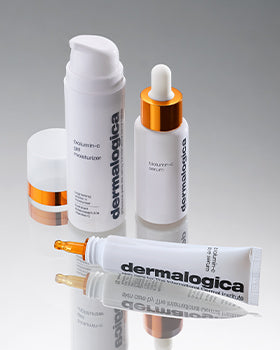
Antioxidants neutralise free radicals before they cause damage — making them essential for daily environmental defence. Layering BioLumin‑C Serum with FutureCode Booster doubles down on antioxidant protection while targeting visible DNA‑related damage and uneven tone.
Consistent hydration and barrier support
A well‑functioning skin barrier is more resilient to environmental stress. Pairing your treatment with MultiVitamin Power Recovery Cream or Skin Smoothing Cream provides the hydration skin needs to perform optimally — and clinical testing showed this pairing boosted skin's defences against oxidative stress and DNA‑related damage by up to 248%.*
FutureCode Booster: designed for skin longevity
FutureCode Booster takes a fundamentally different approach than traditional anti‑ageing products. Instead of masking visible signs of skin ageing, it works to support skin's natural repair functions and reduce visible DNA‑related damage — addressing the root causes rather than the surface effects.
- Longevity Renew Complex — a blend of Teprenone, Niacinamide, and Sunflower Sprout Extract that supports NAD+ levels and natural skin repair for firmer‑looking, more even‑toned skin.
- Omni‑antioxidant blend — featuring Acetyl Zingerone, Rosehip Oil, and Rosemary, this blend neutralises multiple types of free radicals, helping reverse daily DNA‑related damage and defend against visible skin ageing.
- Flexible‑use booster format — use solo or mix into your existing serum or moisturiser, up to four times daily. It's designed to fit into your routine, not replace it.
- Clinical result: in a clinical study, FutureCode Booster was proven to transform the look of skin in just seven days — diminishing the appearance of deepening lines and roughness while improving overall appearance.*†
When you prioritise longevity over "anti‑ageing," you're not just investing in how your skin looks today. You're investing in how it performs for years to come.
*Based on in vitro testing of FutureCode Booster with an antioxidant cream vs. antioxidant cream alone.
†Results at 7 days. Clinical expert evaluation results on multiple skin attributes. Based on an 8‑week clinical study with 33 participants, 2 applications/day.